Beyond the Scoreboard: How USA's Thrilling Win Exposes Associate Nations' Rapid Growth in Women's T20 Cricket
The Nail-Biter That Changed Perspectives
When Ella Claridge smashed 70 runs off 51 balls to secure USA's tense four-wicket victory against Namibia, it wasn't just another qualifier match. This final-over thriller at the Women's T20 World Cup Global Qualifier 2026 exposed a seismic shift in cricket's power dynamics - where associate nations now challenge established hierarchies through calculated infrastructure development and diaspora talent pipelines.
Blueprint for Success: The USA Cricket Model
Claridge's career-defining knock (nearly doubling her previous T20I best) exemplifies USA Cricket's strategic approach. Their investment in:
- Diaspora recruitment programs tapping into cricket-rich nations
- Domestic T20 leagues creating competitive pathways
- High-performance coaching for identified talents
This multi-pronged system transformed a team that once struggled into one capable of chasing down 144 against seasoned opponents. The Namibia clash revealed mental resilience previously associated only with test-playing nations.
Global Qualifier: A Showcase of Rising Forces
The tournament in Nepal has become a revelation platform:
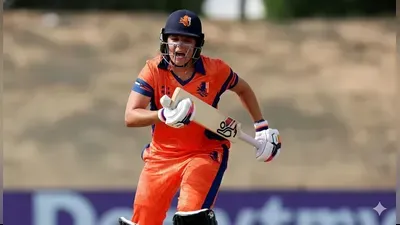
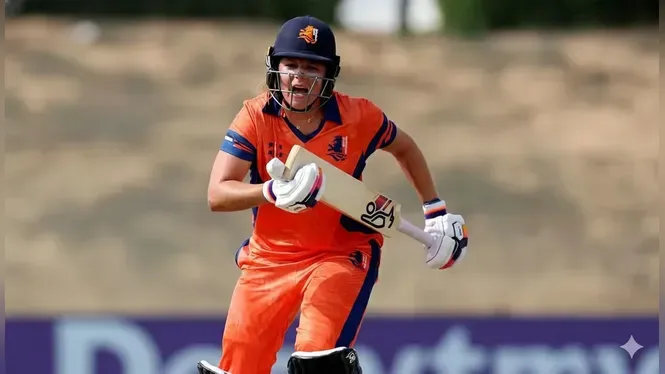
- Netherlands' last-over victory against Scotland powered by Sterre Kalis' unbeaten 87
- Thailand's consistent performances demonstrating Asian depth beyond traditional powers
- Ireland's ranking surge following dominant batting displays
These results collectively prove that ICC development initiatives are yielding tangible outcomes. The days of predictable qualifiers are over - every match now carries genuine competitive uncertainty.
The Infrastructure Revolution
Associate nations are leapfrogging traditional development timelines through:
- Targeted academies: Netherlands' KNCB federation creating specialized women's coaching systems
- Competition exposure: Bangladesh's dominant wins showing benefits of regular T20I scheduling
- Pathway integration: USA leveraging Major League Cricket infrastructure for women's talent identification
This professionalization allows players like Claridge to transition from promising talents to match-winners within structured ecosystems.
Ripple Effects Across Cricket's Ecosystem
The qualifier's outcomes are forcing strategic reevaluations:
- Full members like South Africa scheduling extra T20Is against India to maintain competitive edge
- ICC expanding global qualifying pathways after witnessing unprecedented competitiveness
- Broadcasters increasing coverage of associate nation matches due to rising viewer interest
As Nepal prepares to host Sri Lanka A and other development squads, the message is clear - cricket's future growth lies in these emerging hotspots.
The New World Order
The 2026 Qualifier marks a watershed moment where:
- Diaspora athletes choose associate nations over waiting for test-team opportunities
- Specialist T20 leagues emerge outside traditional cricketing economies
- Global qualifiers become must-watch events due to competitive unpredictability
When USA needed 12 runs off the final two overs against Namibia, their calm execution mirrored champion teams. This mental fortitude - once exclusive to cricket's elite - now permeates through nations rewriting cricket's geography one boundary at a time.
Beyond 2026: Cricket's Evolving Landscape
As teams prepare for England's T20 World Cup, the qualifier has revealed critical insights:
- Associate nations now possess both talent and tactical sophistication to challenge top teams
- Development programs must evolve from basic skill training to high-pressure scenario simulations
- Recruitment pipelines will become cricket's new battleground, with dual-national athletes in high demand
The USA-Namibia thriller wasn't just a match - it was a manifesto. A declaration that women's cricket's future will be written not just in London or Mumbai, but in Houston and Amsterdam, Bangkok and Kathmandu. The global game has found its new engines of growth.